

Inside Women’s Mental Fitness
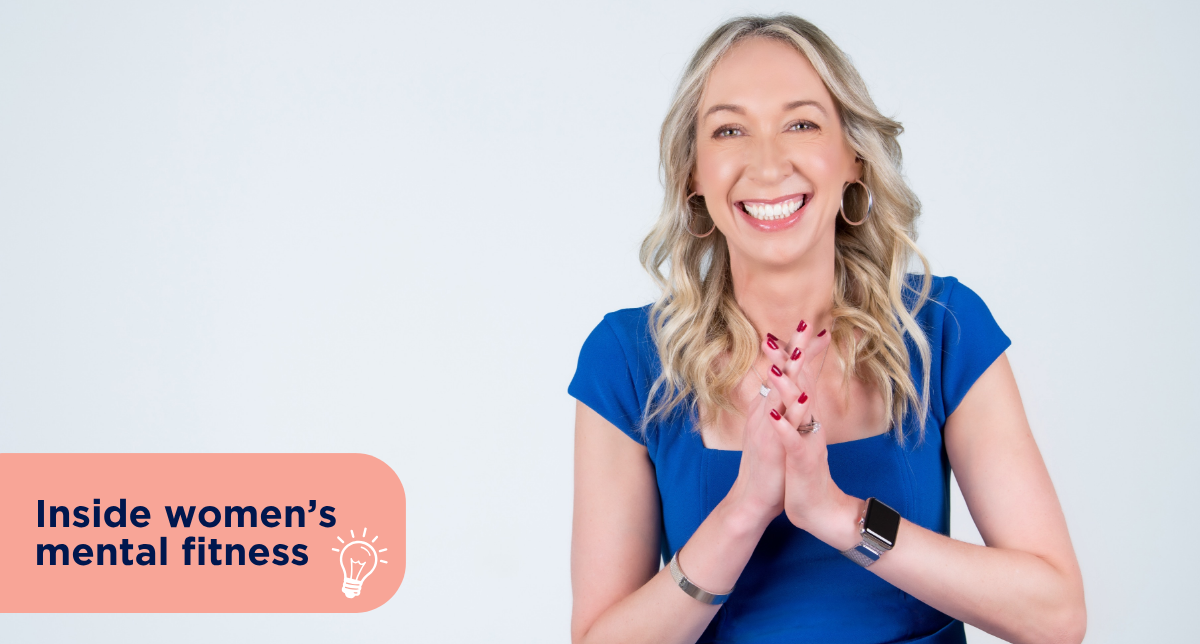
Written by Dr Jodie Lowinger, Clinical Psychologist and Advisory Board Member, Gotcha4Life
The data on women’s mental health in Australia is hard hitting. Seven men and two women lose their lives to suicide every day1. Yet women account for two thirds of the 65,000 suicide attempts recorded each year2. Lifetime prevalence of mental illness is high across both women at 43% and men at 38%, with anxiety the most common condition3. More women seek psychological support, with 21.6% accessing professional help in the past year4. This is a signal of a broader, complex problem shaped by expectations, responsibilities and an often invisible load.
In my work at The Anxiety Clinic and in coaching executive female leaders across industries, I see this pattern every day - highly capable, high performing women who are not lacking resilience, but are operating under sustained pressure. They are leading teams, driving outcomes, caring for others and holding themselves to extraordinarily high standards, all while navigating a constant undercurrent of pressure.
The common thread is not inability, it is accumulation. Stress builds across responsibilities, alongside the cognitive load of managing complexity. It is the emotional weight of staying attuned to others while pushing forward. Over time, this load becomes normalised.
Many women are not asking whether they are stressed. They are asking how much more they can absorb. Burnout and overwhelm are common occurrences.
And this is where the shift matters.
Mental fitness is not about removing stress, or expecting women to simply adapt to more.
It is about having support, tools and space to navigate that load in a way that protects wellbeing.
At Gotcha4Life, mental fitness is defined as the skills and tools that help us navigate life’s ups and downs - not in isolation, but alongside the realities people are living within. There are three powerful levers for change. Emotional adaptability is the first. The goal is not to suppress emotion, but to build the capacity to notice it, name it and choose a response that aligns with values rather than urgency. This might look like recognising the early signs of stress in the body, pausing before reacting in a high pressure moment, or choosing to step away briefly rather than continuing to operate on autopilot.
Social connection is the second. Many women are deeply connected, yet often in roles of supporting others. Mental fitness invites a recalibration towards connection that is reciprocal, where women themselves are supported and understood. In practice, this could be as simple as sharing honestly with a trusted friend, asking a colleague for support instead of taking it all on, or creating space for conversations that go beyond surface level check-ins.
Help seeking is the third. Women are already more likely to reach out. The opportunity is to do so earlier, and with the same priority given to others. That might mean booking an appointment before things are too much to handle, speaking to someone about what is building rather than waiting until it feels unmanageable, or recognising that support is not something that needs to be earned.
The fact that women account for a higher proportion of suicide attempts tells us that distress is present and often intense. It also tells us that there are critical opportunities for earlier support, intervention and skill building.
The hopeful truth is this. With the right tools and support, mental fitness can be built.
I see it every day. When women shift even slightly from operating in constant response mode to taking values aligned action, everything changes. Clarity returns. Capacity expands. Energy is directed towards what matters most.
This is not about asking women to carry more, or to simply adapt to an already heavy load. It is about backing them with the tools, support and connection to navigate what they are already carrying.
And when that happens, the impact extends far beyond the individual. It shapes families, workplaces and communities. This is the work. And it is deeply possible.
1. Australian Bureau of Statistics (2024) Causes of Death, Australia
2. Australian Institute of Health and Welfare (2023) Suicide and Self harm
3. ABS, 2020-22
4. Australian Bureau of Statistics (ABS) National Study of Mental Health and Wellbeing (2020-2022).
You can help equip more people to live
Every donation powers Gotcha4Life to keep developing and delivering life-changing programs and initiatives to equip more people with the mental fitness skills to live.
